How I think about maintainable CSS
03/01/2026
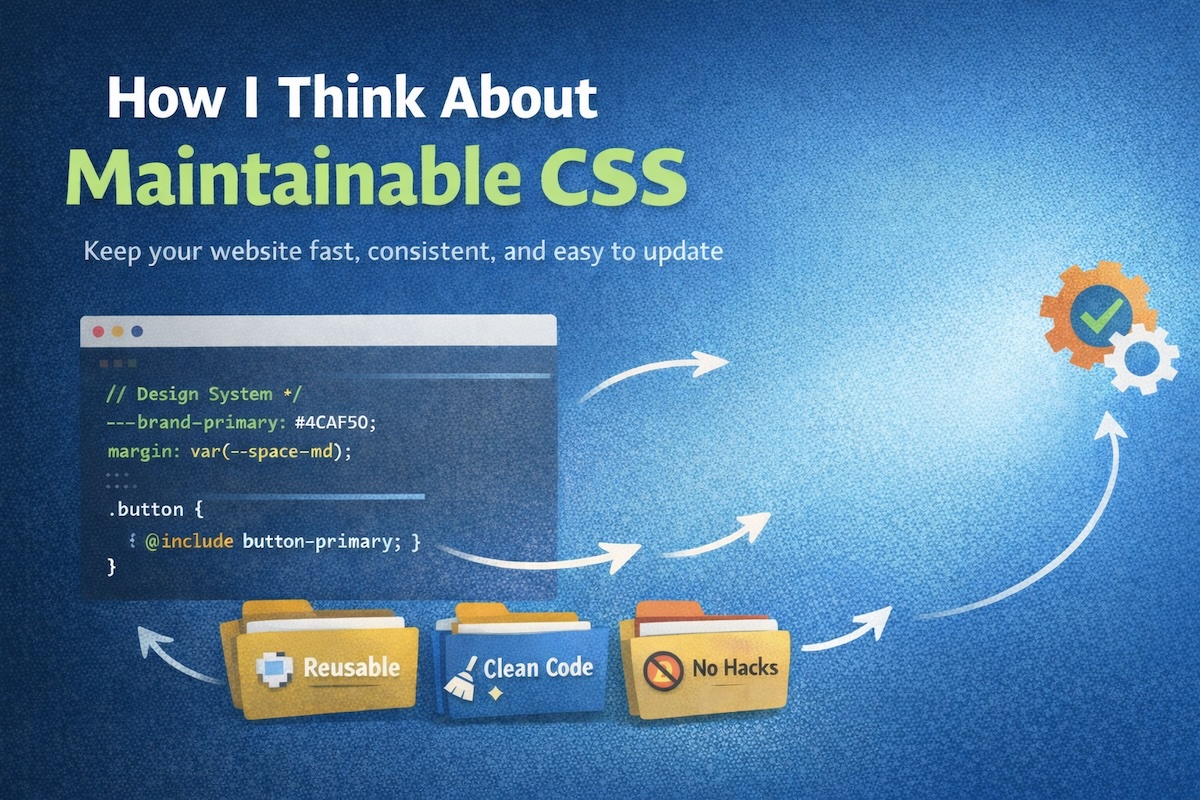
Most websites start clean — and slowly turn messy.
New pages, rushed deadlines, different developers… and suddenly:
- buttons don’t match
- spacing feels random
- changing one style breaks three others
That’s why I care so much about maintainable CSS.
It keeps sites fast, consistent, and cheaper to update long-term.
My goal: CSS that still makes sense months later
I always ask:
“Will the next developer understand this?”
Good CSS should be:
- predictable
- reusable
- easy to change
- hard to accidentally break
1) Start with a simple design system
- Once your project is defined, plan your content carefully. This includes text, images, videos, icons, etc.
- Brainstorm with visual hierarchy. Always focus on the mobile-first approach. Design for the content first, not the container.
- Define navigation.
- Define the site structure. You can draw a sitemap in this step if we’re talking about a bigger project.
Sketch your ideas
Before styling everything, I define:
- colors
- spacing scale
- typography
- buttons and cards
- breakpoints
Then I use tokens instead of random values:
color: var(--brand-primary);
margin: var(--space-md);
Result: consistency — and one place to update things later.
2) Build reusable components (not one-off styles)
Instead of styling every page from scratch, I create:
- shared buttons
- cards
- form elements
That means new features ship faster and stay on-brand.
3) Name things by purpose — not appearance
Bad:
.red-box
.big-title
Better:
alert
section-header
pricing-card
Names should describe what something is, not what it looks like.
4) Avoid hacks that live forever
Sometimes !important or negative margins are tempting.
If I must use them, I document why — and try to remove them later.
Otherwise, CSS becomes fragile.
5) Keep styles local when possible
I prefer scoped styles (CSS Modules, Tailwind, etc.).
Small, local stylesheets = fewer surprises.
6) Performance matters
I regularly prune:
- unused CSS
- duplicated styles
- heavy frameworks we don’t need
Lean CSS = faster pages, better SEO, happier users.
Why clients should care
Maintainable CSS means:
💰 cheaper future changes
🎯 consistent branding
⚡ faster load times
📈 more trust (and conversions)
Messy CSS might be faster to ship — but it costs more later.
If you want a site that grows without breaking
I help businesses build front-ends that are:
- clean
- scalable
- easy to maintain
Whether you’re redesigning, adding features, or cleaning up legacy CSS — I’d love to help.